Airport Link (Brisbane)
Transport Infrastructure · Brisbane, Queensland, Australia
Project Overview
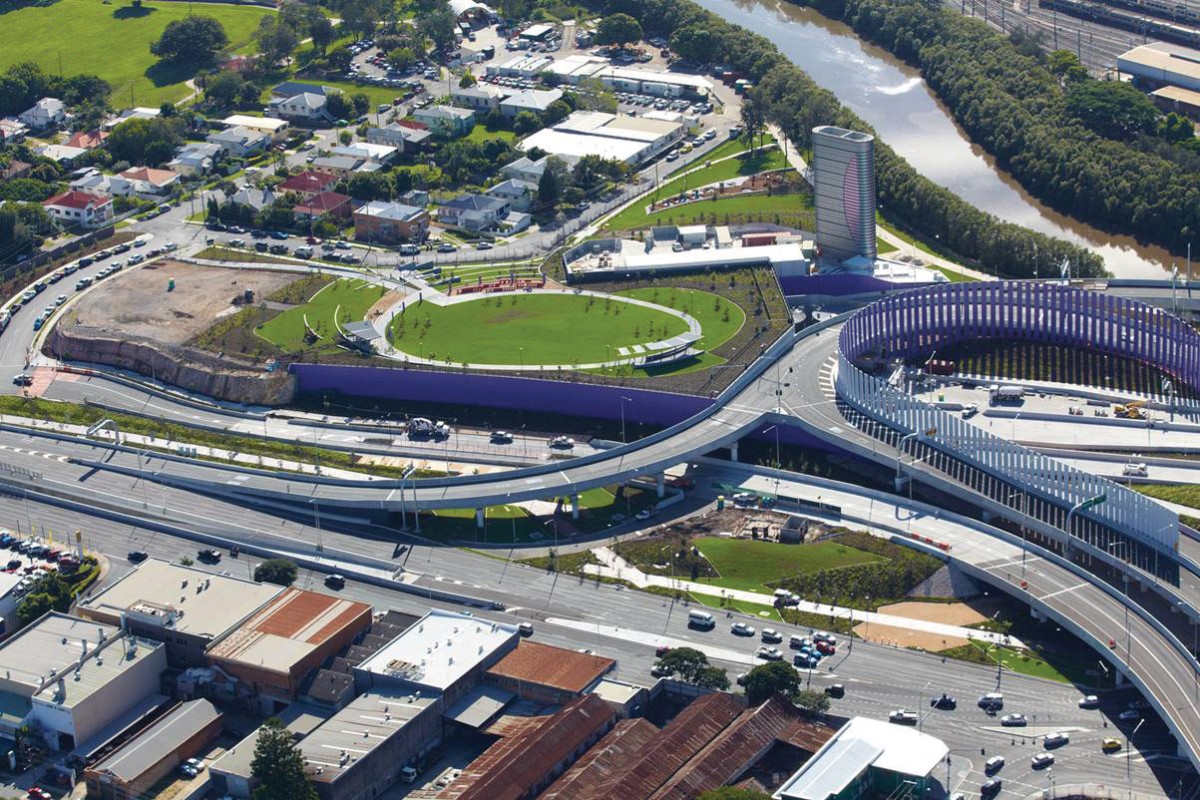
The Airport Link project in Brisbane, Queensland represents one of the most ambitious and
technically complex urban infrastructure developments undertaken in Australia during the late
2000s and early 2010s. Awarded in 2008, the project formed a critical component of Brisbane’s
long-term transport strategy, designed to significantly reduce congestion on surface roads while
improving connectivity between the city’s central business district, northern suburbs, and
Brisbane Airport. At the time, rapid population growth and increasing traffic demand were
placing immense strain on existing road networks, making a high-capacity underground solution
both necessary and strategic.
The project was delivered under a Public–Private Partnership (PPP) model, a structure that
transfers much of the financial risk and operational responsibility to private sector entities while
allowing governments to accelerate infrastructure delivery. The main construction contract was
awarded to Leighton Contractors, working within a joint venture alongside Thiess and John
Holland. The broader consortium, known as BrisConnections, was responsible not only for
construction but also for financing, operating, and maintaining the infrastructure over a
long-term concession period. This integrated delivery approach added layers of financial and
operational complexity, as success depended not only on engineering execution but also on
traffic demand forecasts and toll revenue performance over decades.
The total estimated cost of the Brisbane Airport Link project at the time of contract award was
approximately A$4.8 to A$4.9 billion, making it one of the largest road infrastructure
investments in Australia’s history up to that point. This figure encompassed not just the physical
construction of tunnels and roadways, but also extensive planning, land acquisition,
environmental mitigation, design development, and the integration of advanced traffic
management systems.
At peak construction periods, it is estimated that the project employed between 3,000 and 5,000
workers. The development involved the construction of a 6.7-kilometre motorway, of which
approximately 5.1 kilometres consist of twin tunnels running beneath densely populated urban
areas. The work included approximately 25 bridges, multiple major interchanges and
integration features such as a 3 km Northern Busway and intelligent traffic management systems.
Despite its achievements, the project faced significant challenges including complex geological
conditions, weather-related delays (including major flooding events), design changes and scope
adjustments, and financial pressures related to toll revenue shortfalls. These factors illustrate
the risks associated with megaproject delivery and emphasise the importance of strong
forecasting and adaptive management.
Scope of Work
The following work packages were executed by Leighton as part of this project:
Strategic Value & Impact
This project delivers long-term national value across the following dimensions:
Project Details
Partner With Leighton
Interested in subcontracting or supplying to this type of project?
Submit EnquiryRelated Projects